FET Blogs


FET Blogs
27 July 2026
Have you wondered how engineers automate vehicle assembly, how surgeons perform delicate laparoscopic procedures, or how scientists navigate rovers across Mars?
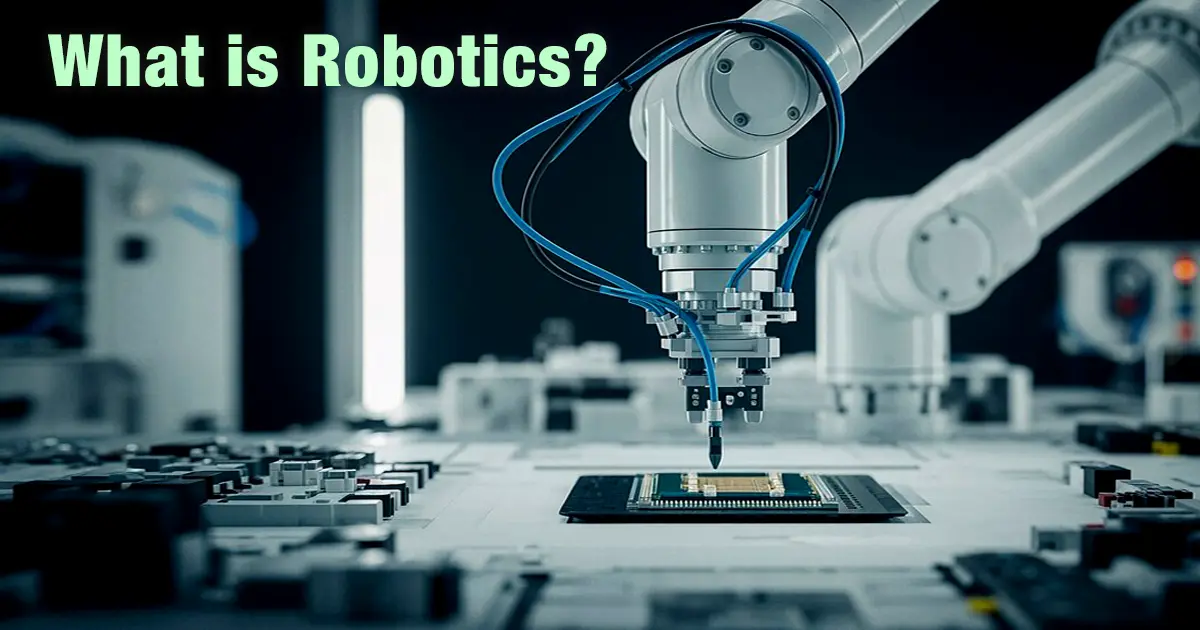
To help you understand the world of robotics, we present you with a guide on what is robotics, how it affects us on an everyday basis, and how you can benefit from it. Robotics combines the design, construction, programming, control, and operation of intelligent machines. While it combines engineering, artificial intelligence (AI), programming, and automation, our guide explains everything from the basics to career opportunities you can explore in the future of the robotics industry.
Robotics is an interdisciplinary field that combines mechanical, electronics, electrical, computer science, artificial intelligence (AI), and control systems engineering. It primarily focuses on designing, building, programming, controlling, and operating robots.
Basically, robots are machines that perform tasks with higher speeds, precision, and consistency than humans. The best part of robotics is that it is up to us to define its functionality. We may increase or decrease its autonomy based on the environment it is installed in. They are built to assist humans, replace repetitive work, and operate safely in situations that require strict surveillance.
We must grasp robotics beyond the confines of textbooks. We will better grasp its importance and functions by using it daily outside of classrooms. While this field traditionally involves large, fixed mechanical arms, modern robotics extends beyond the manufacturing floors of organizations and into the personalized spaces of homes, thereby expanding its functionality and potential for growth and innovation.
A few characteristics that stand out in the field of robotics are the following:
These core capabilities make a robot significantly popular, especially automotive robotics, leading to widespread usage in hospitals, agriculture, warehouses, education, defense, logistics, and even households.
Understanding robotics basics helps demystify how robotic systems share common building blocks. A defined robot consists of the following systems:
| Component | Hardware/Software | Functionality |
| Mechanical Structure | Frames, joints, links, grippers, wheels and legs | This is the skeleton of the robot that helps in the task execution. |
| Sensors | Vision systems, proximity, force/torque, IMUs, and tactile skins | They collect information about the environment. |
| Controllers | Embedded computers or PLCs with real-time control loops | This acts as the computational brain of the robot that processes information. |
| Robotics Software | Applications and instructions | The area that controls perception, planning, navigation, control and communication |
| Actuator and Drives | Electric motors, servos, pneumatic/hydraulic systems | This enables movement of the robot |
| Power Systems | Batteries and power supplies | This ensures that the robot is supplied with the power required to complete a task. |
Robots serve in countless industries, yet they are technically classified under 3 categories - design, functionality, and interaction style. The four primary types of robotics based on where they work include -
Aside from being a source of amusement and discussion, the robotics world has evolved beyond traditional automation. From healthcare and agriculture to moving beyond planetary explorations, robotics has grown into something more than being known for helping in logistics. Robotics today has evolved to integrate multiple technologies that make it more intelligent, adaptable, and capable of performing tasks.
| Technology | Applications | Key Benefit |
| Humanoid Robots | Customer service, healthcare, education | Natural human interaction and assistance |
| AI-Powered Warehouse Robots | Logistics and e-commerce | Faster and more efficient order fulfillment |
| Self-Driving Delivery Robots | Last-mile delivery | Reduced delivery costs and improved convenience |
| Autonomous Surgical Robots | Healthcare | Greater precision and improved patient outcomes |
| Agricultural Robots | Smart farming | Increased productivity and resource efficiency |
| Automotive Robotics | EV battery production, vehicle assembly, quality inspection | Flexible manufacturing, higher precision, and improved quality control |
| Space Exploration Robots | Planetary missions | Safer exploration of extreme environments |
| Soft & Bio-Inspired Robots | Medical procedures, disaster response | Flexible movement in delicate or confined spaces |
| Robotic Skin & Tactile Sensors | Advanced robotics | Human-like sense of touch and environmental awareness |
| Vision AI | Quality inspection, object classification | Real-time visual perception and decision-making in unpredictable environments. |
| Digital Twins | Virtual commissioning, predictive maintenance, system-level factory simulations | Design, test and optimize robotic workflows in risk free digital environments. |
| Edge AI | Autonomous Mobile Robots (AMRs), self-driving logistics vehicles, remote search & rescue | Process machine learning models and achieve sub-millisecond reaction times. |
| Swarm Robotics | Large-scale warehouse fulfillment, environmental monitoring, precision agriculture | High scalability and resilience to coordinate decentralized tasks without failures. |
The robotics world is yours if your interests lie with programming, electronics, artificial intelligence, automation, and mechanical design. If you are interested in pursuing a career in new robotics, JAIN (Deemed-to-be University) offers BTech in Mechanical Engineering with a specialization in Robotics that meets with industry trends and growth. Become a member of change; join the task force of shaping the future of manufacturing, healthcare, agriculture, logistics, space exploration, and many allied industries.
As a graduate of this program, you can explore opportunities such as -
Every robot created today has two major components - the Hardware and the Software. The mechanical component builds the physical body of the robot. But the hidden engine that runs the system is the software. The software installed into the robot allows it to process sensor data, perceive the environment, and make real-time decisions that calculate precise movement.
New robotics engineers rely on a stack of industry-standard frameworks, simulation tools, and visualization packages. They include -
| Software Tool | Category | Key Function & Purpose |
| ROS / ROS 2 | Middleware Framework | The Robot Operating System (ROS) enables hardware components to communicate effectively. |
| Gazebo & Isaac Sim | 3D Physics Simulation | Simulation platforms used to test algorithms in a virtual environment before deployment. |
| MoveIt | Motion Planning | The industry standard for mobile manipulation, path planning, kinematics, and collision avoidance. |
| RViz | Visual Debugging | A 3D visualization tool that developers leverage to see what robot sensors perceive in real time. |
| MATLAB & Simulink | Algorithm & Control Design | Essential tools that enable mathematical modelling, control system development and rapid prototyping of algorithms. |
Robotics is changing how industries function and operate. They are transforming how humans interact with technology. Driven by combining mechanical engineering, intelligent software, and artificial intelligence, the modern robot is increasingly becoming autonomous, adaptable, and collaborative.
Why wait longer? At JAIN (Deemed-to-be University), we offer a B.Tech. Mechanical Engineering program that enables you to specialize in Robotics. This program helps you build your expertise in building models that work on everything from precision surgery to automated logistics and planetary exploration. Grow to be the skilled professional that the industry demands today. Design, program, and manage intelligent systems that continue to accelerate the advancement of science and the economy.
A1. Robotics is called "robotics" because it is the branch of science and engineering that focuses on designing, building, programming, and operating robots. The term combines "robot," derived from the Czech word "robota," meaning "forced labor," with the suffix "-ics," which refers to a field of study.
A2. Robotics is the field of technology that involves creating and using robots to perform tasks automatically or with minimal human intervention. It combines mechanical engineering, electronics, computer science, and artificial intelligence to develop machines that can assist people or work independently.
A3. Yes, robotics is a promising career with growing opportunities across industries such as manufacturing, healthcare, automotive, aerospace, logistics, agriculture, and defense. As automation and artificial intelligence continue to expand, professionals with robotics skills are increasingly in demand for roles in design, programming, system integration, and research.
A4. The four common types of robotics are
A5. No, JEE is not always required to study robotics. While some engineering colleges admit students through JEE Main or JEE Advanced, many universities conduct their own entrance exams or offer admissions based on state-level entrance tests or merit. Admission requirements vary depending on the institution and the robotics or engineering program you choose.
Ask an Expert for Free