News


04 February 2026
Aerodynamics Day at FET Highlights Legacy of Ludwig Prandtl and Advances in High-Speed Flow Research
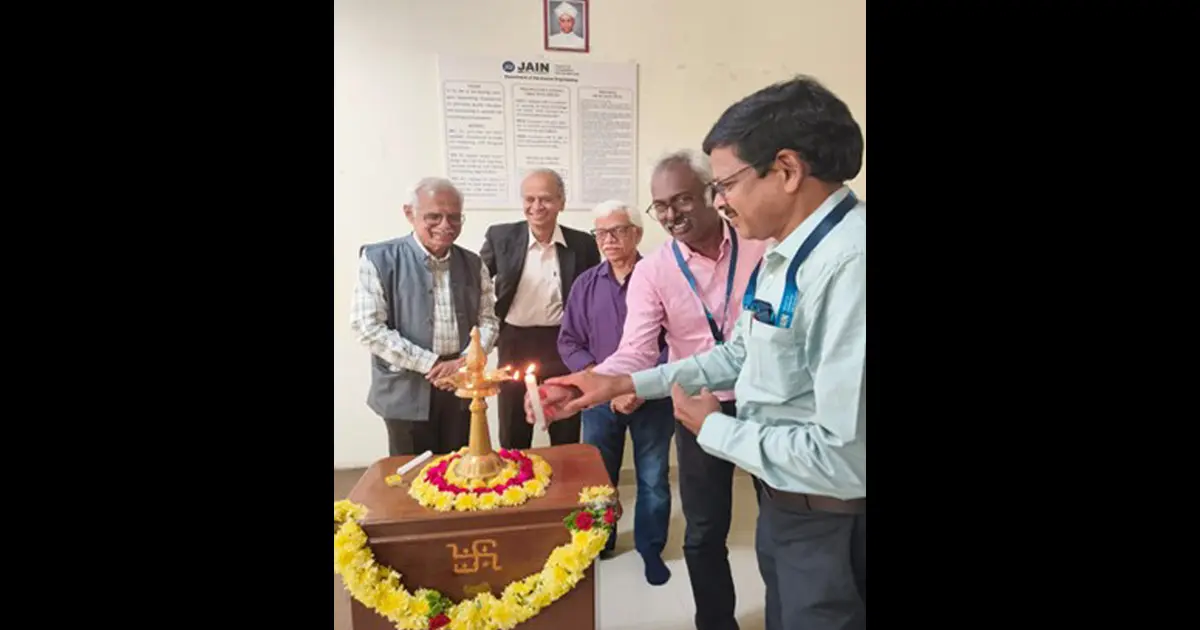
Bengaluru, 4th February 2026: The Department of Aerospace Engineering at the Faculty of Engineering and Technology (FET), JAIN (Deemed-to-be University), marked Aerodynamics Day on 4th February 2026 at JAIN Global Campus with a series of expert lectures examining contemporary research in aerodynamic science. The one-day academic programme, held from 9:00 AM to 1:00 PM, brought together around 60 students and faculty members to reflect on the scientific contributions of Ludwig Prandtl, widely regarded as the father of modern aerodynamics.
The event was organised to commemorate Prandtl’s foundational work, particularly his development of boundary layer theory, which continues to underpin modern aerodynamic research and aircraft design. The programme also provided a platform for researchers and academicians to discuss emerging developments in aerodynamic analysis, high-speed flows, and aerospace applications.
The inaugural session highlighted the continuing relevance of aerodynamics in the design and performance of aircraft, spacecraft, and high-speed vehicles. Speakers noted that many contemporary developments in fluid dynamics, computational modelling, and aerodynamic testing are built upon theoretical principles first introduced by Prandtl.
The technical sessions featured talks by scientists and academicians working in aerospace research and engineering. Dr. Muralidhar, Scientist in the Aerodynamics Division at the Aeronautical Development Agency (ADA), discussed current aerodynamic analysis activities undertaken for national aerospace programmes, providing insights into practical research applications in aircraft development.
Dr. Biju Uthup, former scientist at ADA and Project Manager for the Ghatak programme, presented perspectives on the role of aerodynamics in aircraft design and the evolving demands placed on aerospace engineering education in India. Additional sessions explored specialised topics including bio-inspired aerodynamic flows, advanced boundary layer analysis through triple-deck theory, and manipulation of shear and boundary layers in high-speed flow regimes.
Further lectures examined the physics of shock waves and their influence on aircraft performance, as well as the interaction between supersonic jet flows and boundary layers. These discussions provided participants with exposure to both theoretical developments and applied aerodynamic research relevant to modern aerospace systems.
The programme was organised under the guidance of Dr. Sudhir Sastry and Dr. Sundeep Rao, with coordination support from faculty member Shashikumar S. By bringing together experts engaged in advanced aerodynamics research, the event offered students an opportunity to engage with current scientific challenges and developments shaping the future of aerospace engineering.