News


17 February 2026
Civil Engineering Students Study Water Management Systems at Suvarnamukhi Reservoir
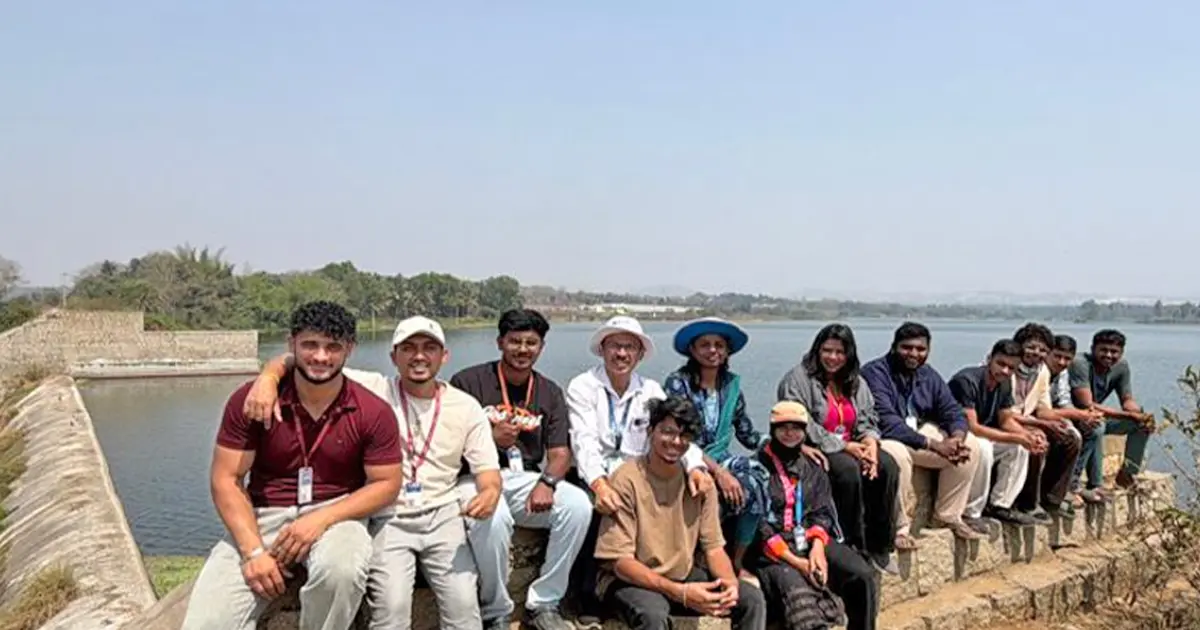
Bengaluru, 17th February 2026: The Department of Civil Engineering at JAIN (Deemed-to-be University), through the Atharva Club, organised an industrial visit for third-year Civil Engineering students to the Suvarnamukhi Water Reservoir and Check Dam at Kanchugaranahalli, Harohalli, on 17th February 2026. The field visit provided students with direct exposure to water resource engineering structures and their role in sustainable water management.
A total of 14 students participated in the one-day visit, which aimed to strengthen their understanding of water storage systems and their practical applications in irrigation and groundwater recharge. Such field-based learning initiatives form an important part of engineering education by helping students connect theoretical concepts with real-world infrastructure.
During the visit, Dr. Gopalakrishna Gaonkar, Assistant Professor in the Department of Civil Engineering, served as the resource person and guided the students through the reservoir site. He explained the design and functioning of key components of the system, including the check dam, reservoir structure, and earthen bund. The session also covered the role of these structures in regulating water flow, storing runoff, and improving groundwater recharge in surrounding areas.
Students were introduced to important design considerations involved in small-scale water resource projects, including structural stability, environmental factors, and long-term maintenance. Observing the structures in field conditions enabled them to understand the practical challenges associated with planning and managing water infrastructure.
The visit also encouraged interactive learning, with students engaging in discussions and clarifying technical queries related to hydrology, reservoir construction, and site conditions. This interaction provided additional insights into the engineering and environmental aspects of water resource systems.
By offering first-hand exposure to operational reservoir infrastructure, the industrial visit enhanced students’ practical knowledge of water resource engineering and highlighted the importance of small-scale water conservation structures in supporting irrigation and sustainable groundwater management.