News


24 August 2026
The Workforce Question Behind India's EV Push
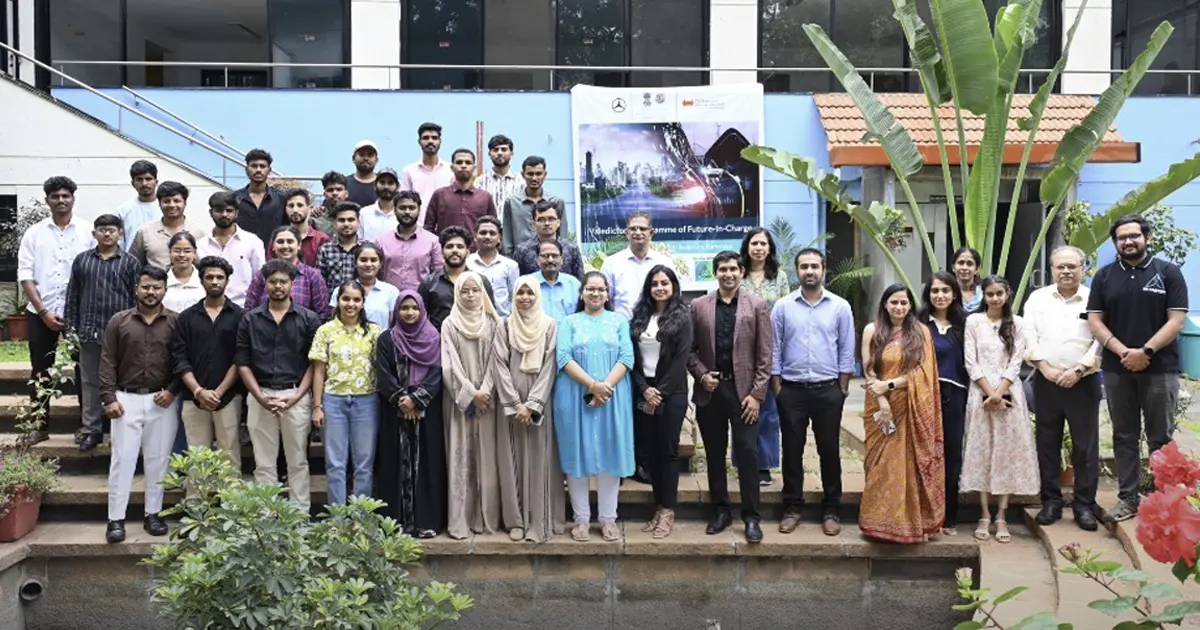
Bengaluru, 24 August 2026: India's electric vehicle industry cannot move faster than its charging infrastructure allows. That was the recurring thread at a stakeholder workshop held at the TERI Southern Regional Centre, where Dr Vasudha Hegde, Professor and Head, Department of Electrical and Electronics Engineering, Faculty of Engineering and Technology, represented JAIN (Deemed-to-be University).
The Accelerating EV Charging Infrastructure Through Industry-Led Skilling Partnerships workshop brought together industry, government, academia and skilling institutions to work through one shared question: how does India build a charging network reliable enough for the vehicles now filling its roads.
The answer, as the discussions made clear, had as much to do with people as with plugs. Speakers addressed the standards, maintenance systems and technologies charging infrastructure needs, but returned often to the workforce behind it, particularly electrical and electronics engineers equipped for EV design, power systems, grid integration, installation, testing and troubleshooting. Without them, even well-funded infrastructure plans stall.
For Dr Hegde, the sessions offered more than an update on the sector. She exchanged perspectives with professionals from TERI, Ecoconnect, Vision Astra, Mercedes-Benz Research and Development India and Dronacharya Tech-Hub, conversations that surfaced the practical gaps between what engineering students learn and what the EV industry now expects of them.
That gap is where the Department sees an opening. Ideas raised at the workshop, on strengthening curriculum, value-added programmes, industry interaction and student projects around EV technology and charging systems, are expected to feed into the Department's ongoing efforts to keep its graduates ready for an industry still being built in real time.
The workshop did not close with a fixed formula. What it left behind was a clearer picture of where the missing pieces are, and who will need to be trained to supply them.