Enquiry Form
Fill the Form To Download Brochure
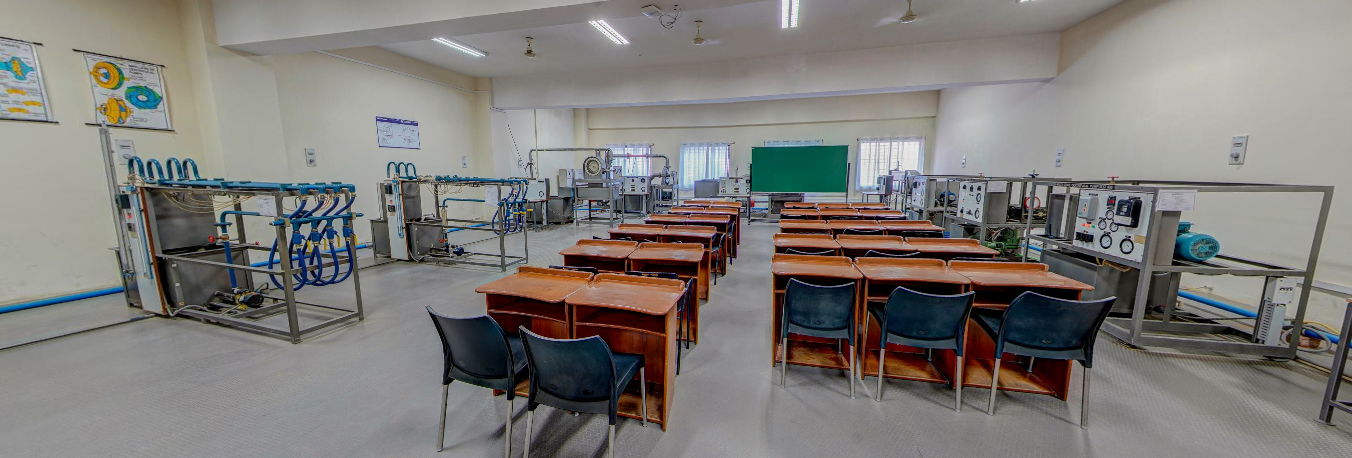
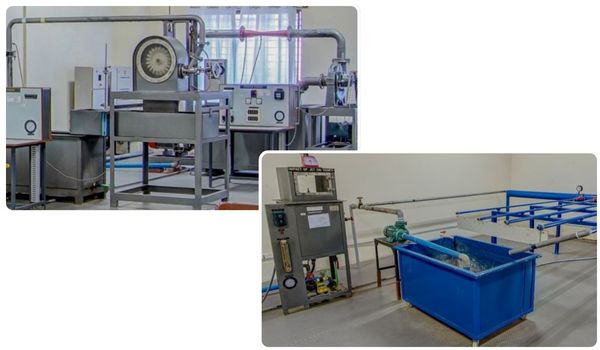
The Fluid Mechanics and Machinery Lab provides students with a practical understanding of fluid properties, fluid behaviour, and the functioning of hydraulic machines used in civil engineering applications. The lab is equipped with facilities for studying flow measurement, fluid dynamics, and the performance evaluation of hydraulic equipment.
Students conduct experiments to determine viscosity, metacentric height, discharge through orifices and notches, friction losses in pipes, and calibration of flow-measuring devices. The lab also includes experiments on turbines, pumps, and other hydraulic machinery to study their efficiency, characteristics, and operating conditions.
Through these hands-on activities, students gain a clear understanding of real-time fluid flow behaviour, principles of energy transfer, and the performance of hydraulic systems used in water supply, irrigation, drainage, and hydropower projects. The lab bridges theoretical concepts with applied engineering, preparing students to analyse, design, and maintain fluid-related systems in the field.
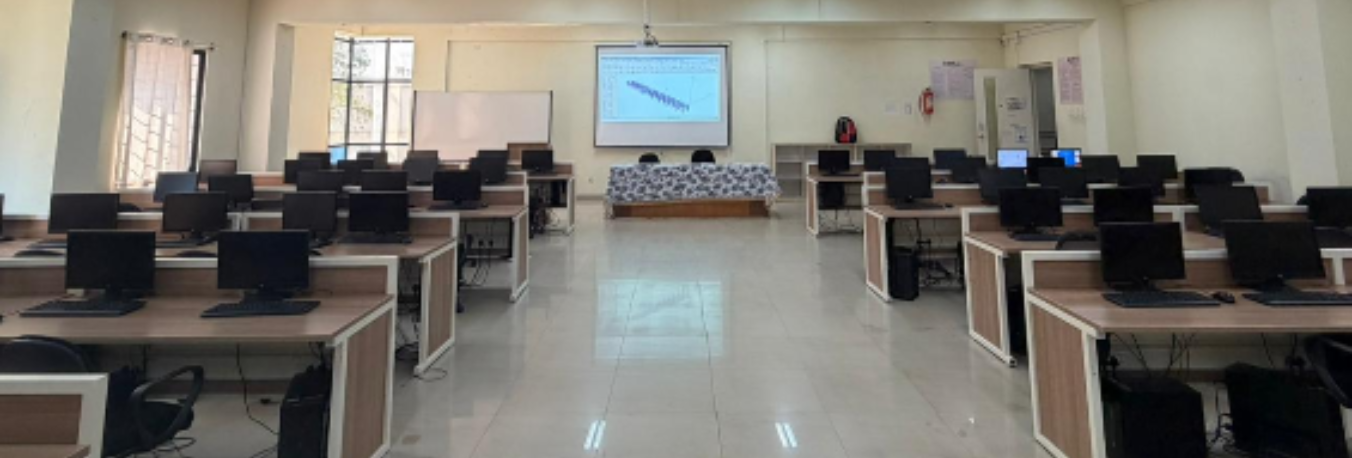
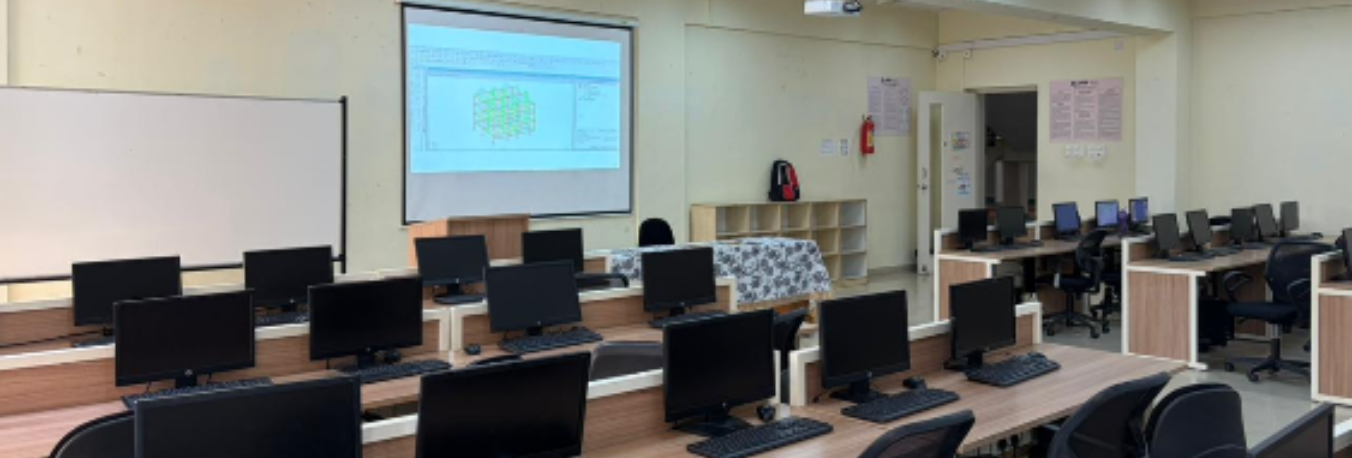
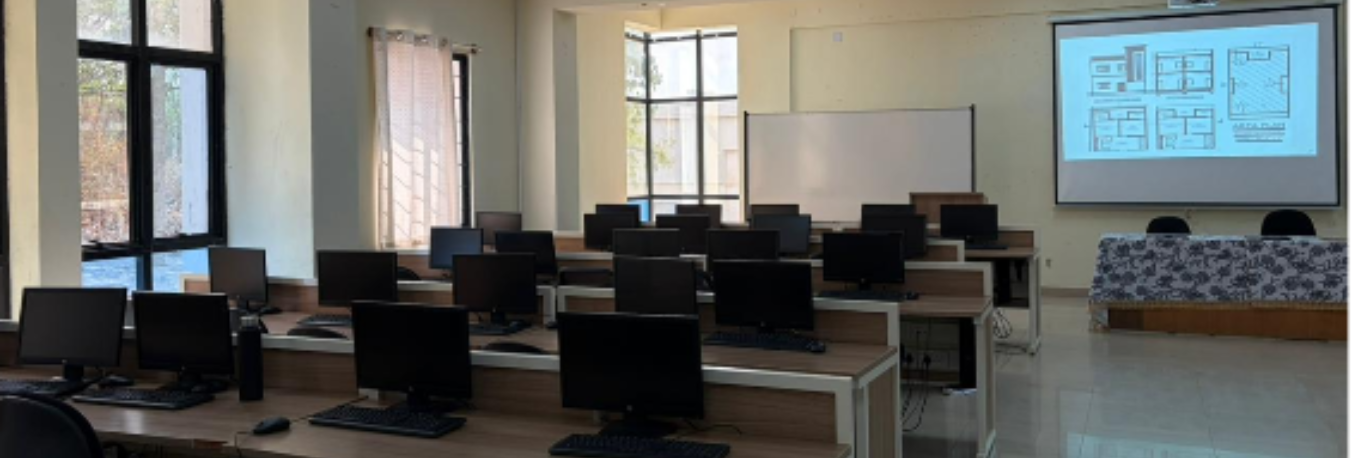
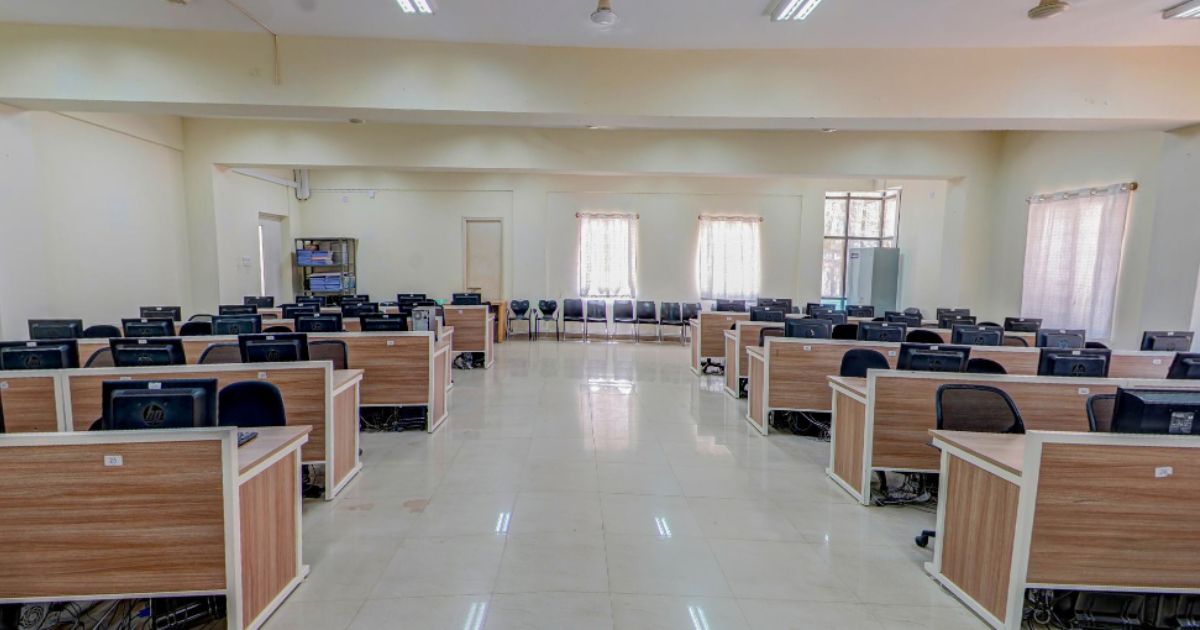
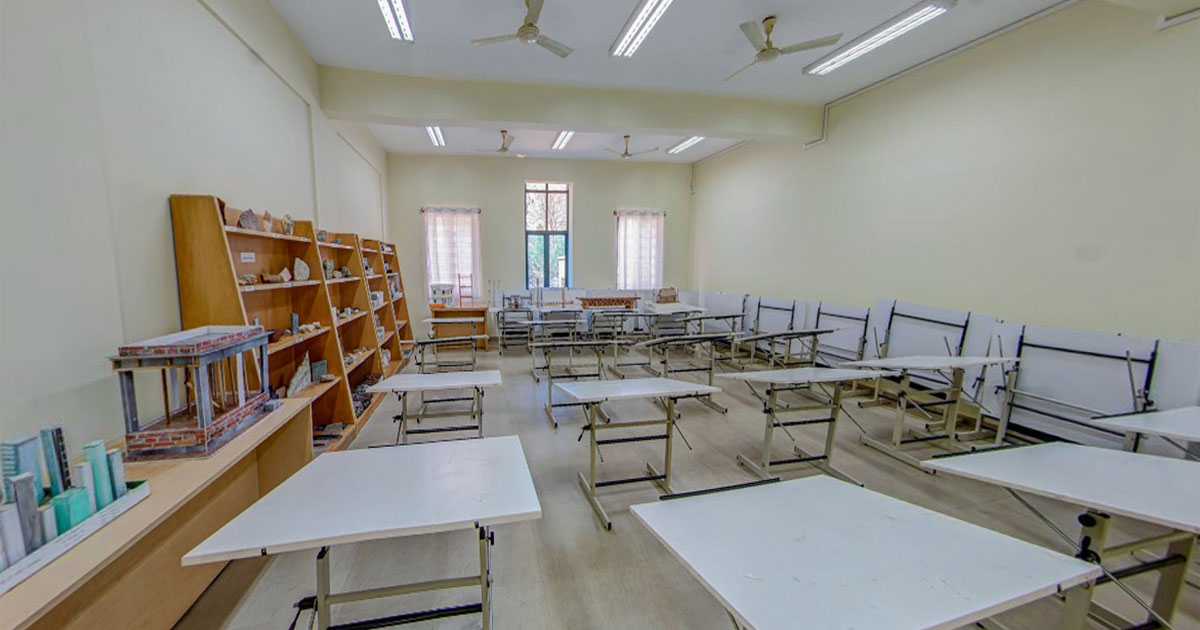
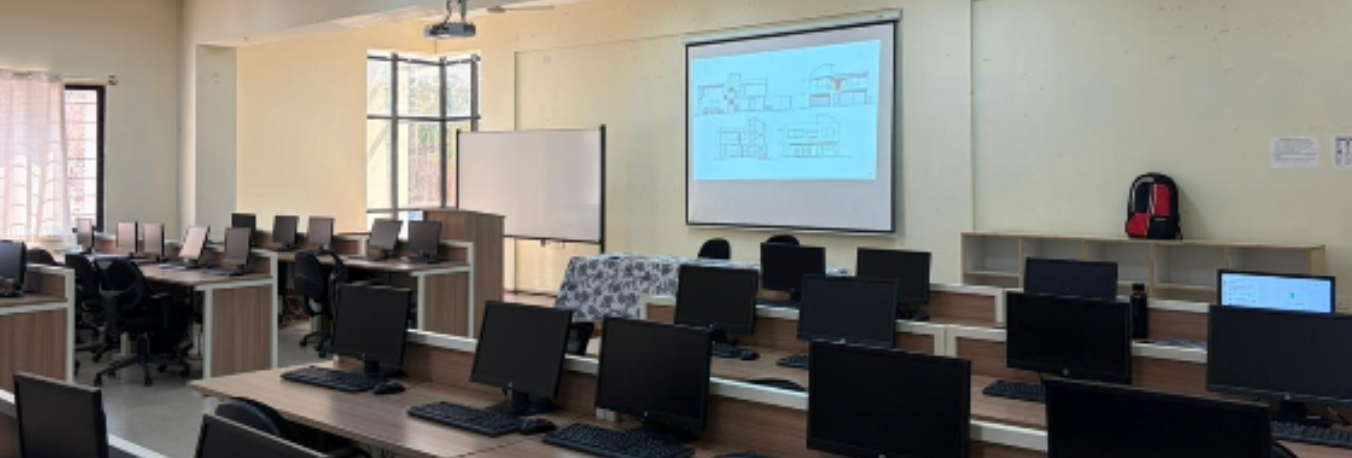
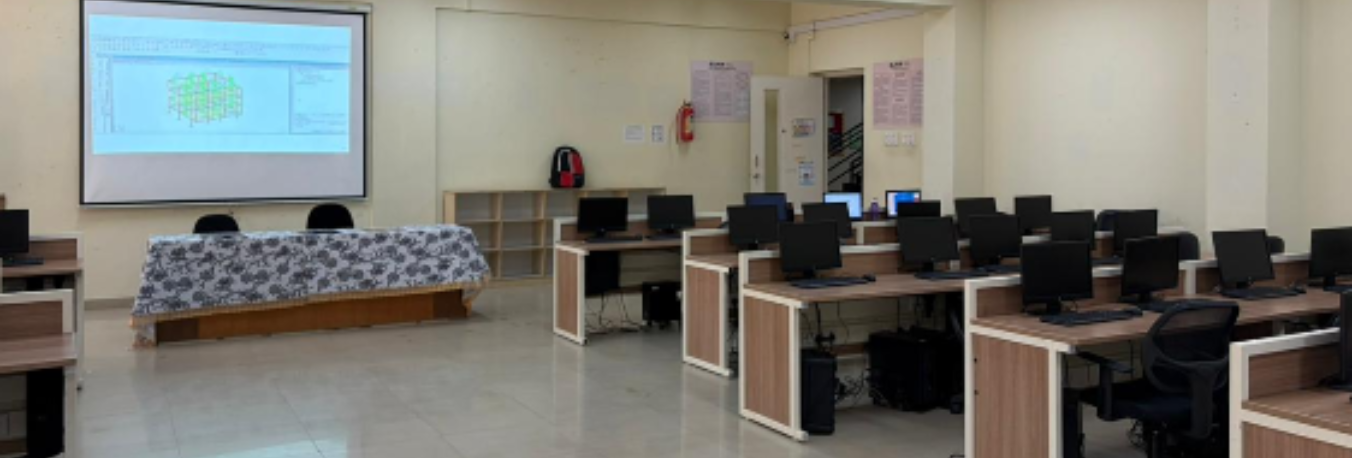
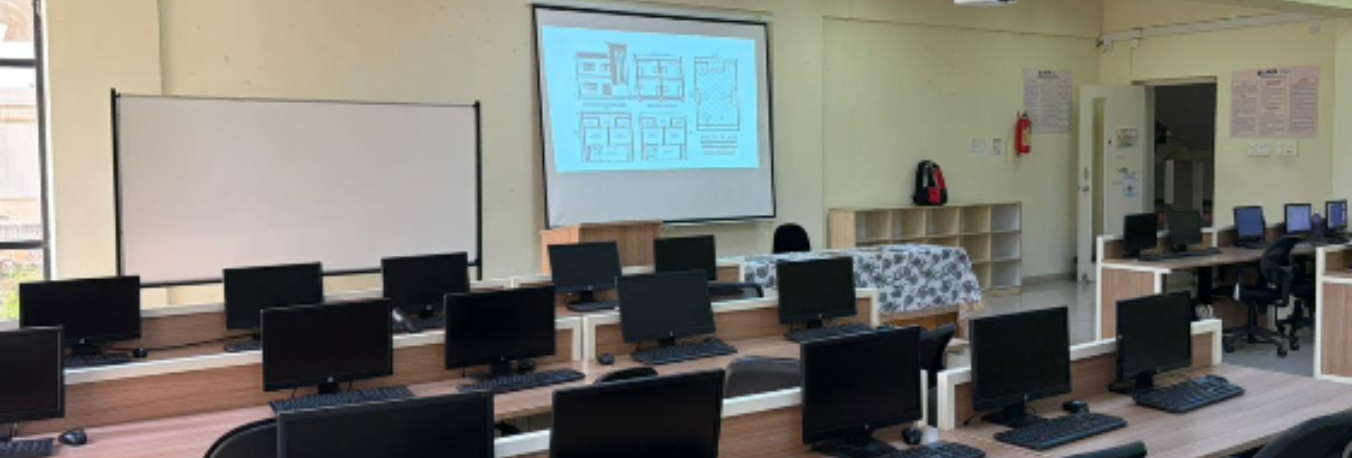
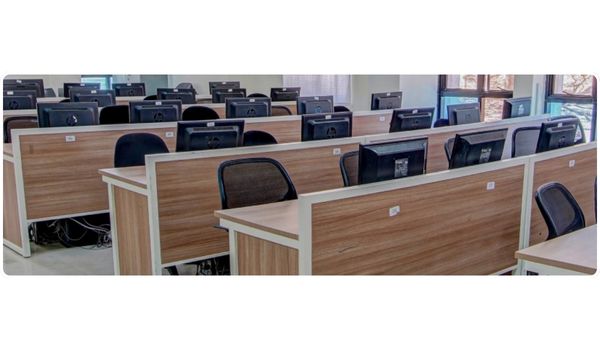
The 3D Visualisation and Design Laboratory introduces students to computer-aided drafting and modelling techniques essential for civil engineering design and documentation. The lab provides hands-on experience in preparing accurate 2D drawings and 3D models using software such as AutoCAD, Revit Architecture, SketchUp, and STAAD.Pro. Students learn to develop plans, elevations, sections, and basic structural visualisations while understanding drawing standards and digital design workflows.
The laboratory supports students in gaining confidence with digital tools, enhancing their ability to visualise engineering concepts, interpret design details, and present project layouts effectively. By integrating software-based drafting and modelling with real-world applications, the lab strengthens students’ technical skills and prepares them for professional engineering practice.
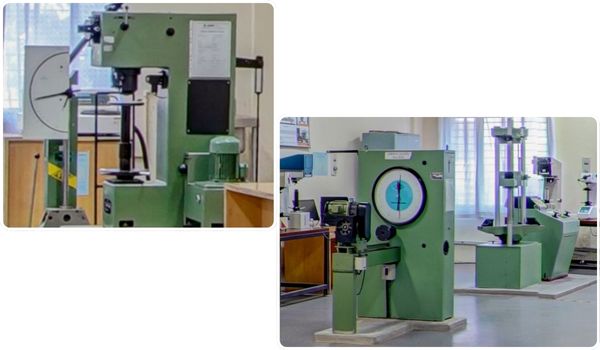
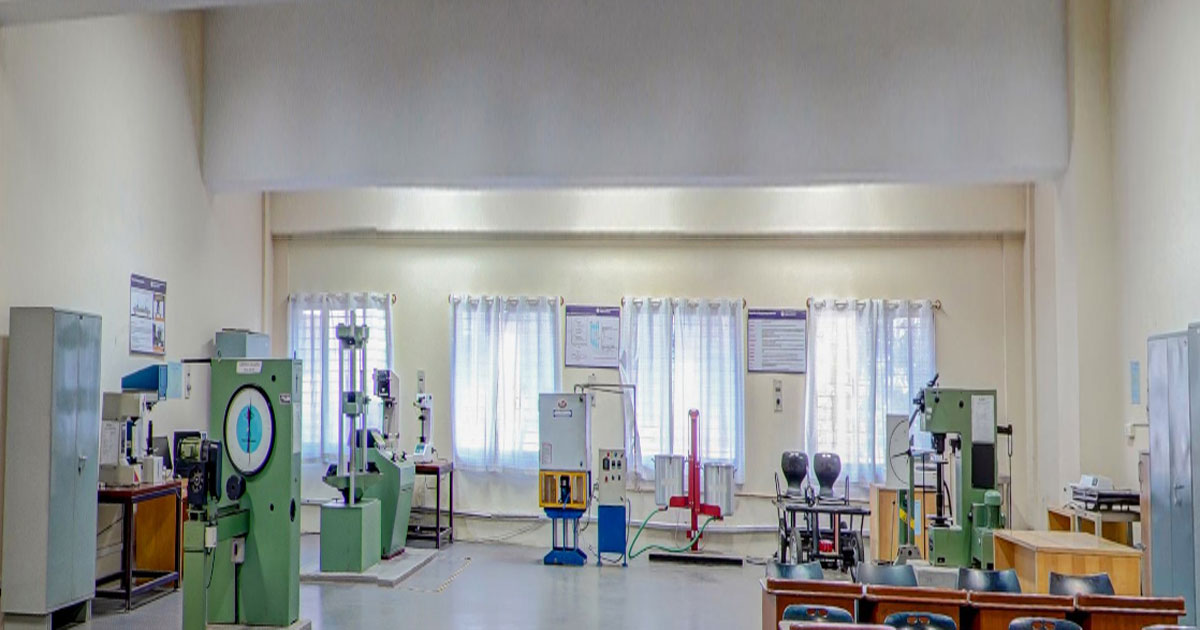
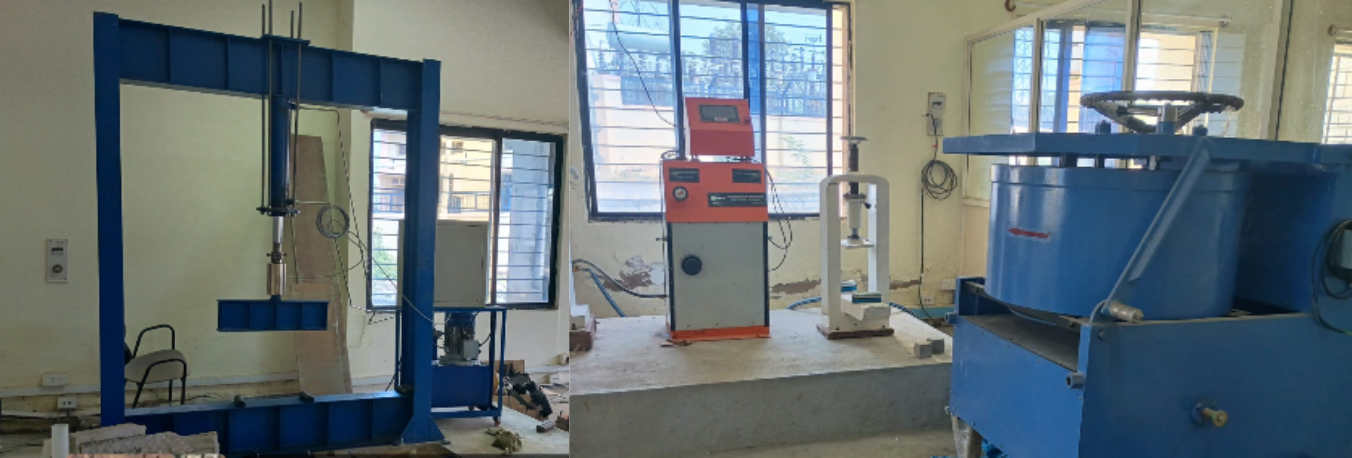
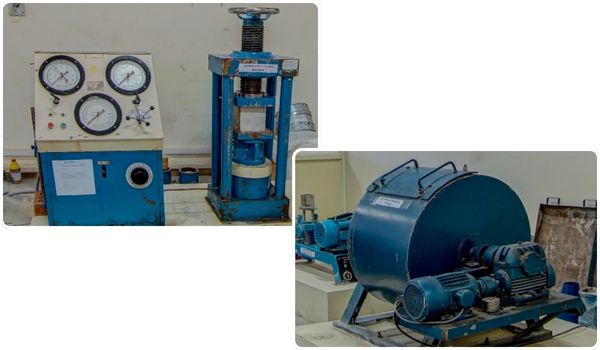
The Material Testing Laboratory provides students with practical knowledge of the mechanical properties of construction materials used in civil engineering. The lab enables hands-on experience in determining strength, durability, elasticity, hardness, toughness, and other fundamental characteristics of materials such as cement, concrete, steel, bricks, aggregates, and timber.
Students perform experiments using universal testing machines, compression testing machines, impact testing machines, hardness testers, and other standard equipment. The lab introduces concepts related to stress–strain behaviour, modulus of elasticity, ductility, brittleness, and material failure patterns, helping students understand how materials behave under different loading conditions.
By connecting theoretical principles to real-time test results, the Material Testing Lab supports students in evaluating material quality, ensuring compliance with safety standards, and selecting appropriate materials for various civil engineering applications. The laboratory lays a strong foundation for structural design, construction supervision, and field quality control practices.
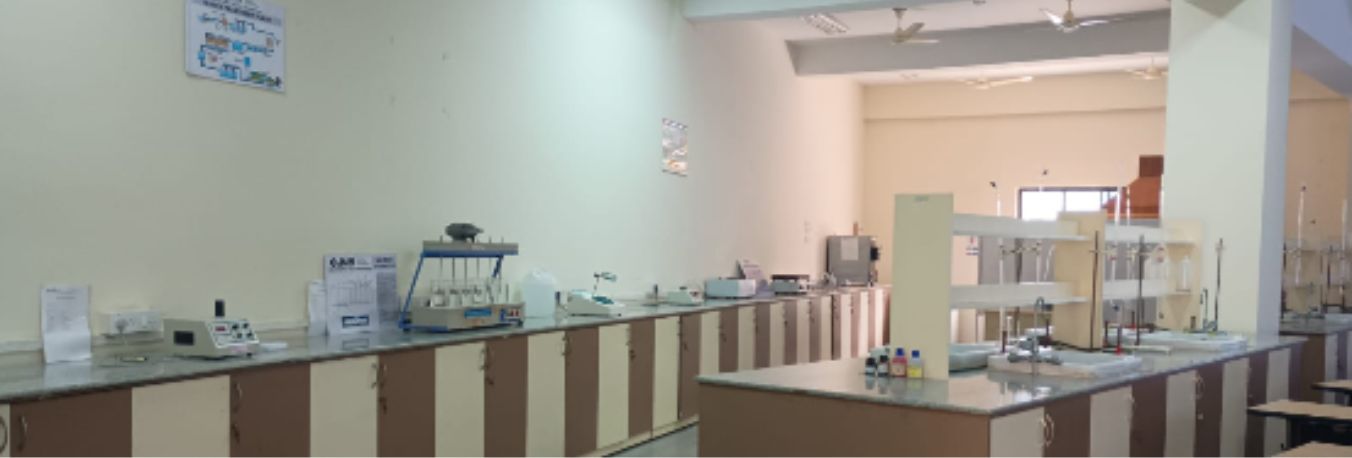
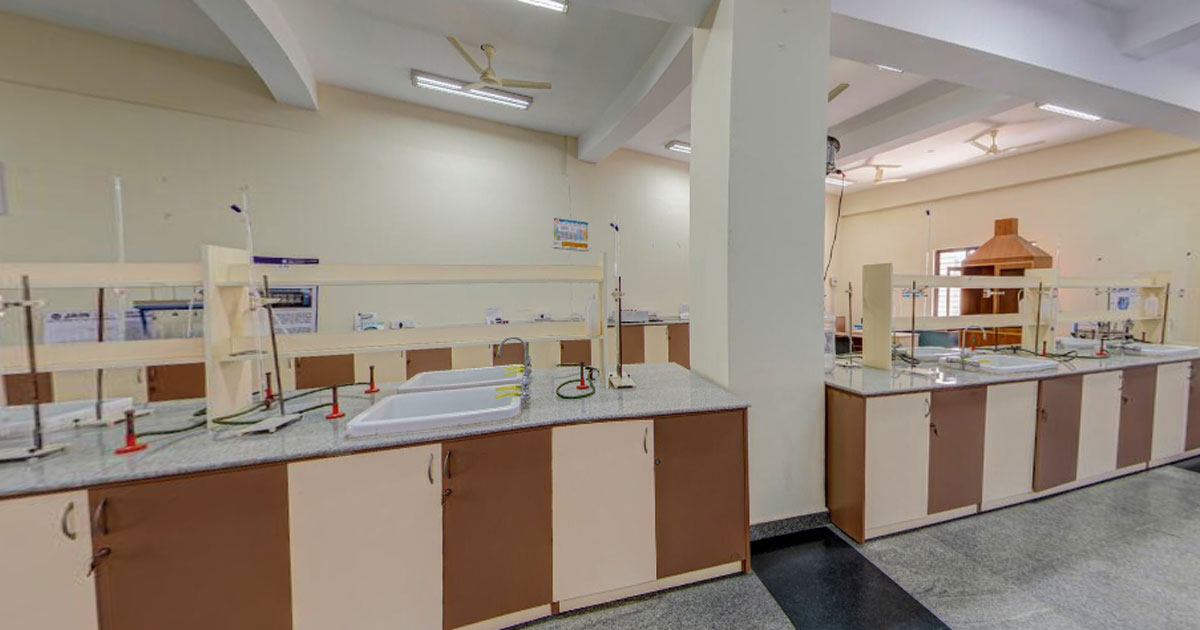
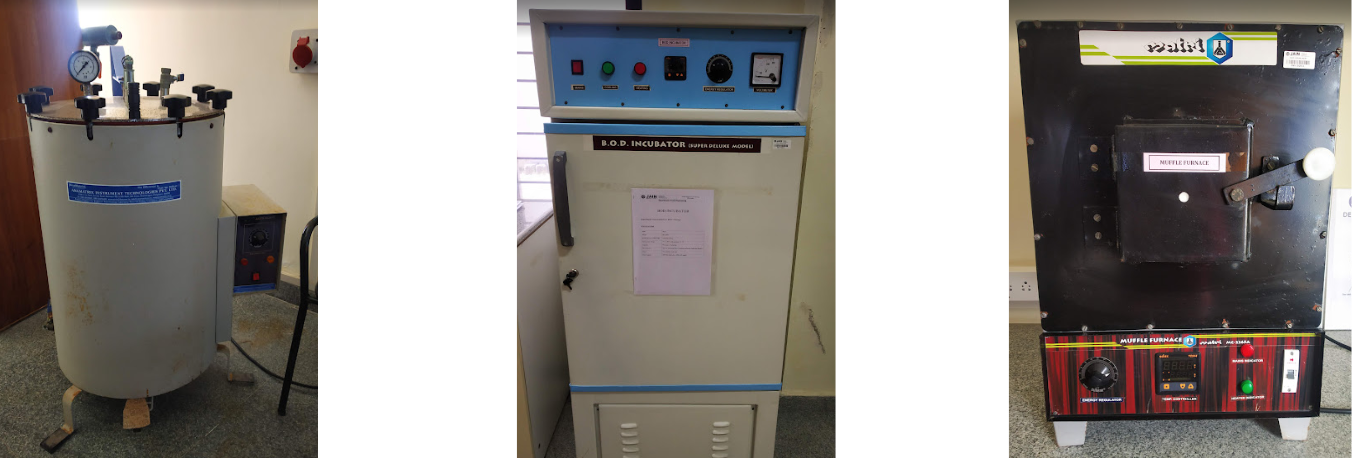
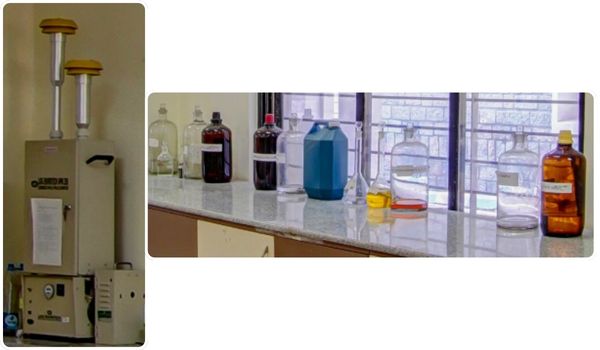
The Environmental Engineering Laboratory provides students with hands-on experience in monitoring, analysing, and treating environmental pollutants, bridging theoretical concepts with real-world applications. Equipped with facilities for water and wastewater analysis, air quality monitoring, and solid waste characterisation, the lab enables students to perform tests such as pH, turbidity, BOD, COD, jar tests for coagulation, and determination of various physical, chemical, and biological parameters. Students learn the fundamentals of water and wastewater treatment, characteristics of municipal and industrial effluents, design and performance evaluation of treatment units, and basic air and noise pollution measurement. The lab’s focus on sustainable environmental management, pollution control, and regulatory compliance builds a strong foundation for careers in environmental engineering, public health, urban infrastructure, and research, while nurturing critical thinking, innovation, and problem-solving skills.
The Engineering Geology Lab helps civil engineering students understand the geological characteristics that influence the planning and construction of engineering structures. The lab provides practical experience in identifying minerals and rocks, studying geological formations, and interpreting geological and topographic maps.
Students learn to classify igneous, sedimentary, and metamorphic rocks, observe geological structures such as folds, faults, joints, and bedding planes, and understand their impact on construction activities. The lab also introduces the engineering relevance of soil and rock properties, slope stability, groundwater conditions, and site investigation methods.
By connecting geological concepts with real-world civil engineering applications, the lab enhances students’ ability to assess site conditions and make informed decisions for foundations, tunnels, dams, roads, and other major infrastructure projects.
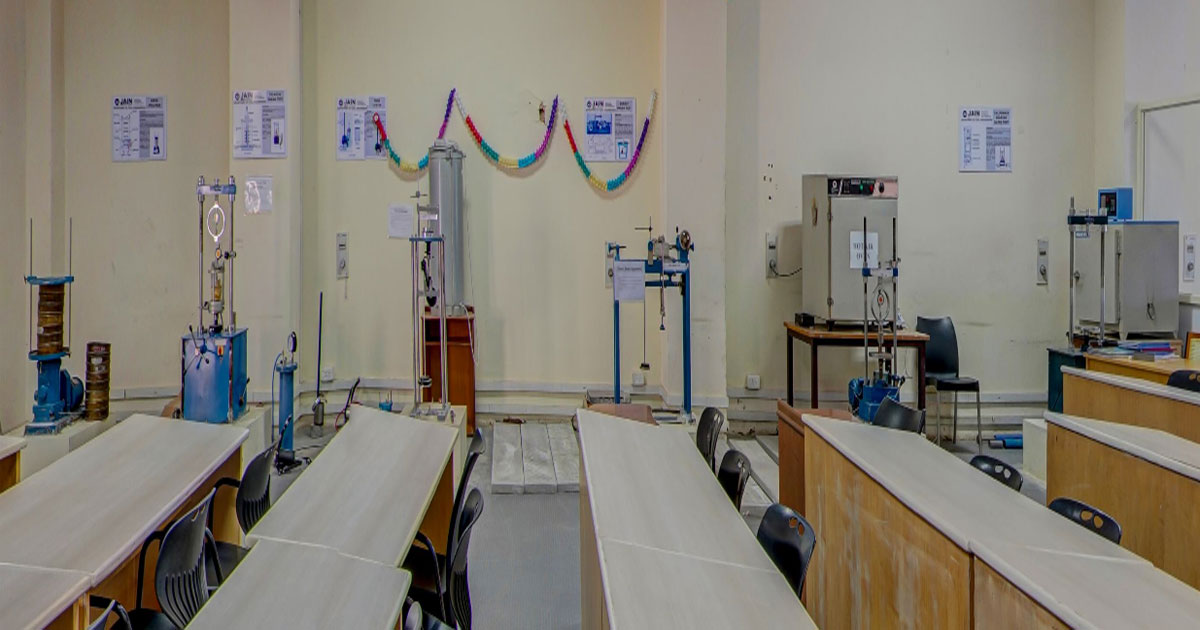
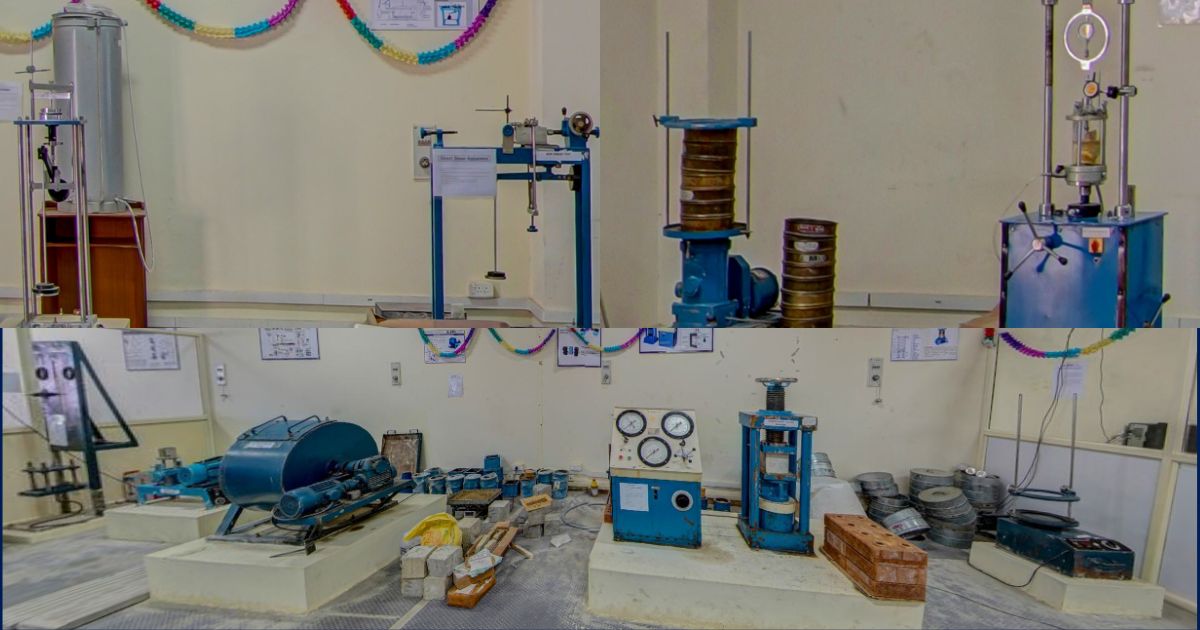
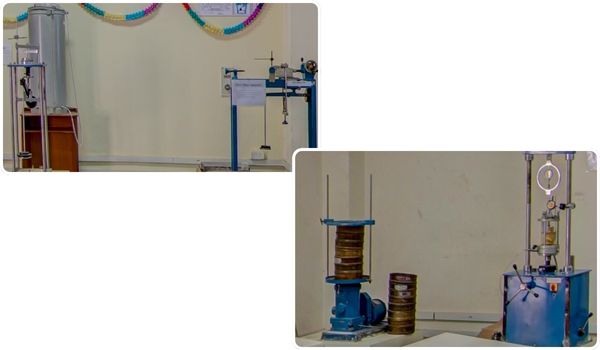
The Geotechnical Engineering Laboratory provides students with practical experience in determining soil engineering properties, which are essential for the analysis and design of foundations, earth structures, and other civil engineering projects. The lab enables students to study soil classification, compaction characteristics, permeability, shear strength, and consolidation behaviour through standard testing procedures.
Students perform experiments such as sieve analysis, Atterberg limits, Proctor compaction test, permeability test, direct shear test, triaxial test, unconfined compression test, and consolidation test using dedicated soil testing equipment. These experiments help students understand soil behaviour under different loading and drainage conditions and evaluate its suitability for construction.
By connecting laboratory results to geotechnical principles, the lab prepares students to assess site conditions, estimate bearing capacity, analyse settlement, and make informed decisions on foundation design and earthwork construction. The Geotechnical Engineering Lab forms an essential foundation for safe, reliable, and efficient geotechnical engineering practice.
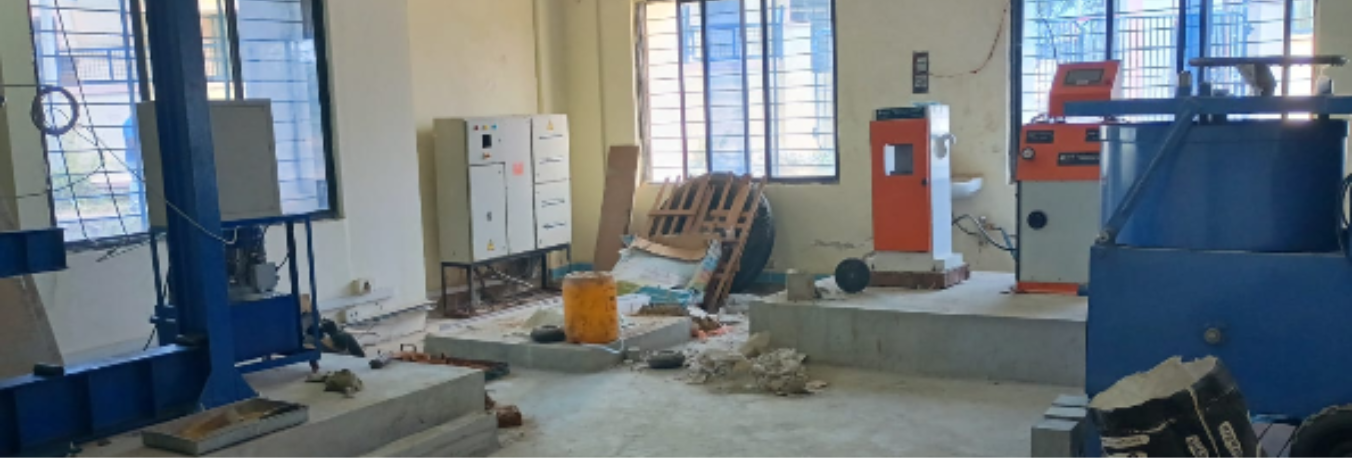
The Construction Material Testing Laboratory provides students with a practical understanding of the properties and behaviour of materials commonly used in civil engineering works. The lab offers hands-on testing of cement, concrete, aggregates, bricks, steel, timber, and other construction materials to assess their strength, durability, quality, and suitability for structural applications.
Students conduct experiments using compression testing machines, universal testing machines, Vicat apparatus, sieve analysis equipment, impact and hardness testing devices, and other standard instruments. These tests help students understand material characteristics such as consistency, workability, fineness, specific gravity, stress–strain behaviour, and load-bearing capacity.
By linking experimental results with theoretical concepts, the Construction Material Testing Lab enables students to evaluate material performance, follow engineering standards, and ensure quality control in construction practices. This laboratory forms a strong foundation for structural design, construction supervision, and professional decision-making in civil engineering.
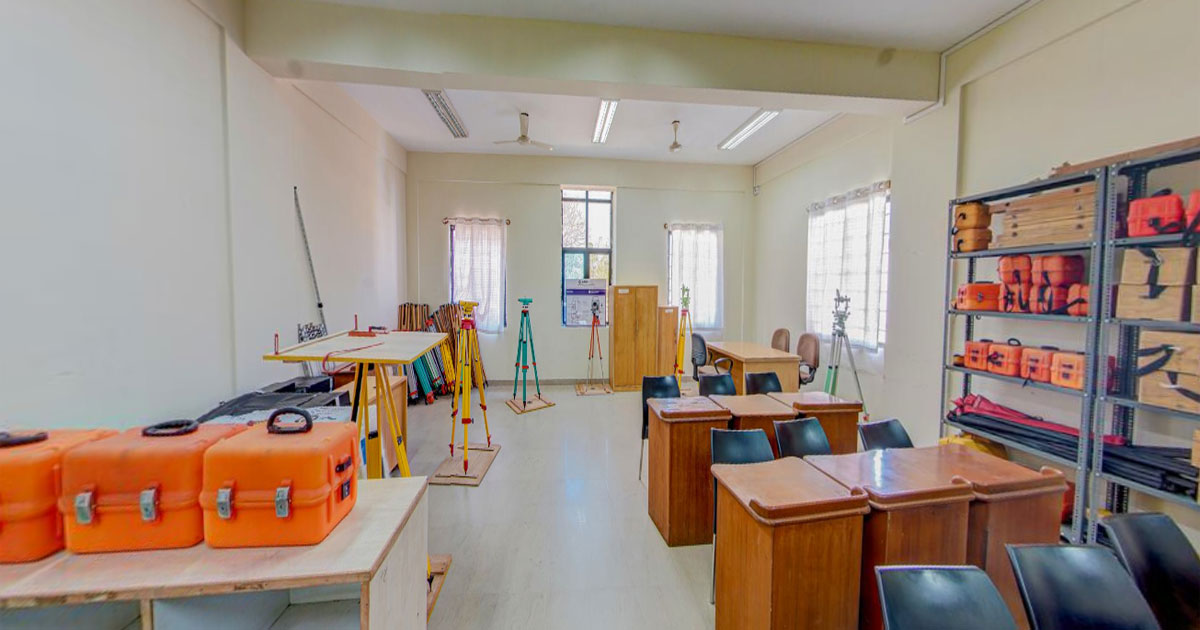
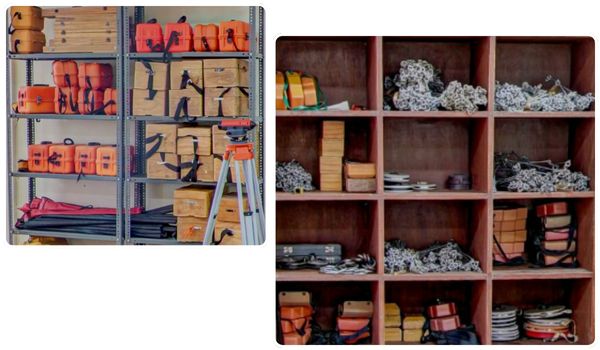
The Geometrology Laboratory provides students with practical exposure to measurement techniques, precision instruments, and dimensional accuracy, all essential to civil engineering applications. The lab helps students understand the principles of linear, angular, and surface measurements used in construction, surveying, material inspection, and quality control processes.
Students use instruments such as vernier callipers, micrometres, dial gauges, spirit levels, theodolites, total stations, and surface measurement devices to perform accurate measurements and verify dimensional properties. The experiments enable students to learn calibration procedures, error analysis, and proper handling of precision tools.
By linking hands-on measurement practices with engineering applications, the Geometrology Lab enhances students’ understanding of accuracy, reliability, and standardisation in construction and surveying. The lab builds a strong foundation for quality assurance, site measurement, and professional engineering practice.