News


19 August 2026
What a Structural Engineer Needs to Know Now
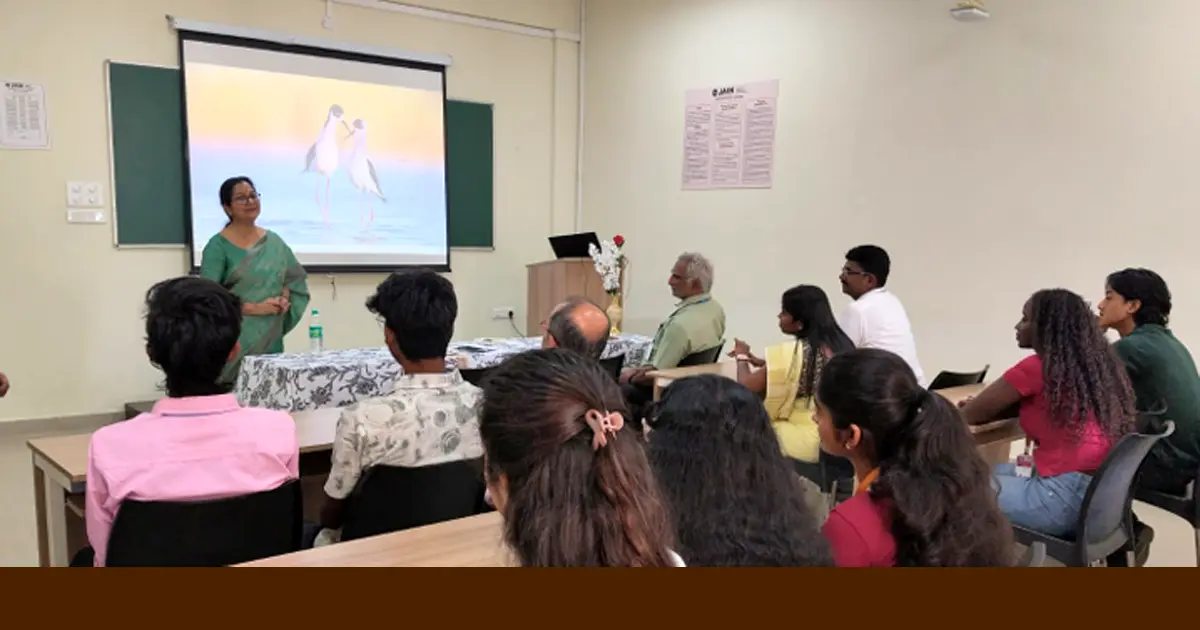
Bengaluru, 19th August 2026: A cracked wall can be repaired once it is seen. A crack still forming inside a structure often cannot. That gap is what sensors, data and monitoring systems are increasingly built to close, and it framed the talk Dr Sujatha Unnikrishnan gave to civil engineering students at JAIN.
Atharva, the student club of the Department of Civil Engineering, Faculty of Engineering and Technology, invited Dr Unnikrishnan, Associate Professor and Head of the Department of Civil Engineering at CHRIST (Deemed to be University), Bengaluru, to speak on "Recent Trends and Emerging Technologies in Structural Engineering: Towards Smart, Sustainable and Resilient Structures." The department organises sessions like this to keep its curriculum in step with a field that is changing faster than most textbooks can track.
Dr Unnikrishnan spoke about Structural Health Monitoring and smart sensing, technologies that let a building signal wear before it becomes damage. She connected this to Artificial Intelligence, Building Information Modelling and Digital Twins, all now used to model, construct and maintain structures more precisely than before. Sustainable materials and resilient design featured too, alongside the Internet of Things, computer vision and data driven engineering, tools she described as increasingly central to structural work rather than optional extras.
Students were also introduced to research and career paths shaped by these shifts, including what the industry now expects under Construction 4.0. The session ended with students asking Dr Unnikrishnan about higher studies and the practical demands of the profession.
For a department invested in preparing engineers who can work across both concrete and code, the talk offered something concrete of its own: a clearer sense of where the field is headed, and what it will take to keep up with it.