News


26 March 2026
Arduino Workshop Enables Students to Build Functional IoT Prototypes Through Hands-On System Design
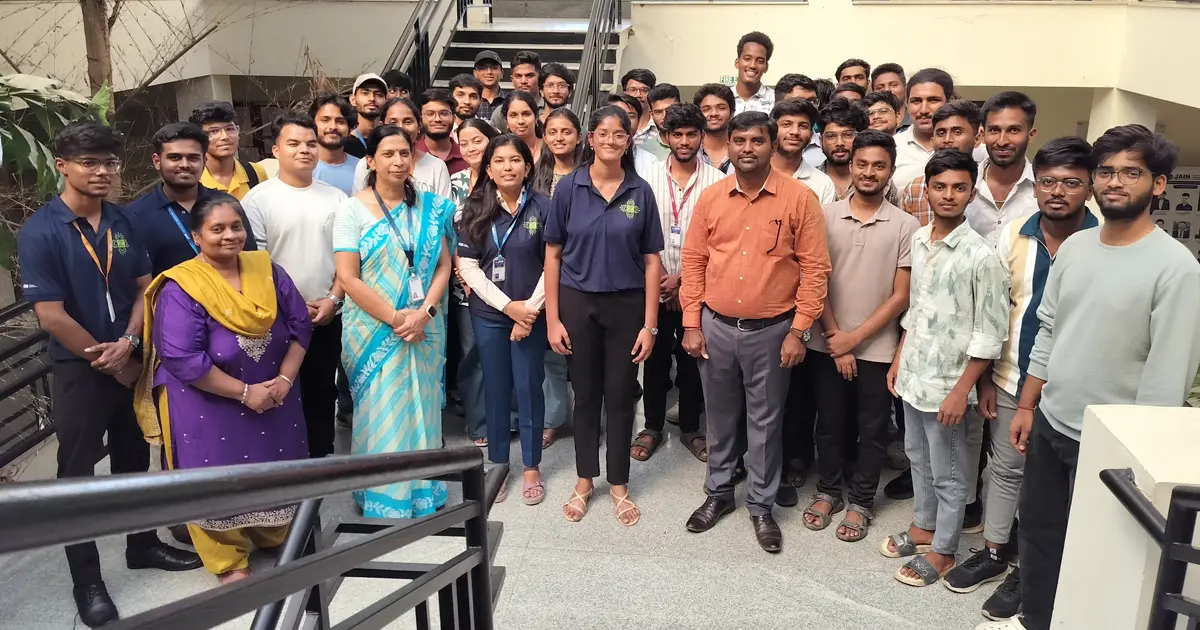
Bengaluru, 26th March 2026: The Faculty of Engineering and Technology at JAIN (Deemed-to-be University) conducted a one-day workshop on “Arduino-Based IoT System Design” on 26th March 2026 at the JAIN Global Campus. The session, organised by the Department of Electrical and Electronics Engineering under the SPARK Club in association with the Zigbee Club and IoT Department, engaged 40 students in practical learning on embedded systems and connected technologies.
The workshop focused on equipping participants with foundational and applied knowledge of Internet of Things (IoT) system design. Students were introduced to key concepts including microcontroller architecture, Arduino programming, sensor interfacing, real-time data acquisition, and wireless communication. The programme emphasised how these components are integrated to develop scalable and efficient smart systems.
A significant component of the workshop involved hands-on activities, where participants worked with Arduino boards and sensors such as PIR, IR, and ultrasonic modules to design and test functional prototypes. These exercises enabled students to understand circuit design, coding practices, and hardware–software integration within real-world contexts.
Sessions were facilitated by student members of the Zigbee Club, including Varshitha L., Kiran Malik M., Keerthana P. Malode, and Shashank, under the guidance of faculty coordinators Dr Vasudha Hegde and Dr Raghu N. The workshop also included interactive discussions on applications of IoT in domains such as home automation, smart security systems, environmental monitoring, healthcare, and industrial automation.
Participants explored practical challenges in system development, including debugging, efficient resource utilisation, and designing reliable and scalable solutions. The programme further highlighted the role of data-driven systems in improving operational efficiency and decision-making across industries.
The initiative contributed to strengthening technical competencies in embedded systems and IoT, reinforcing the importance of experiential learning in engineering education. It also underscored the growing relevance of connected technologies in shaping future career pathways in automation and intelligent system design.