News


15 December 2025
JAIN (Deemed-to-be University) Hosts Sustainable House Model Making Competition to Promote Green Construction Practices
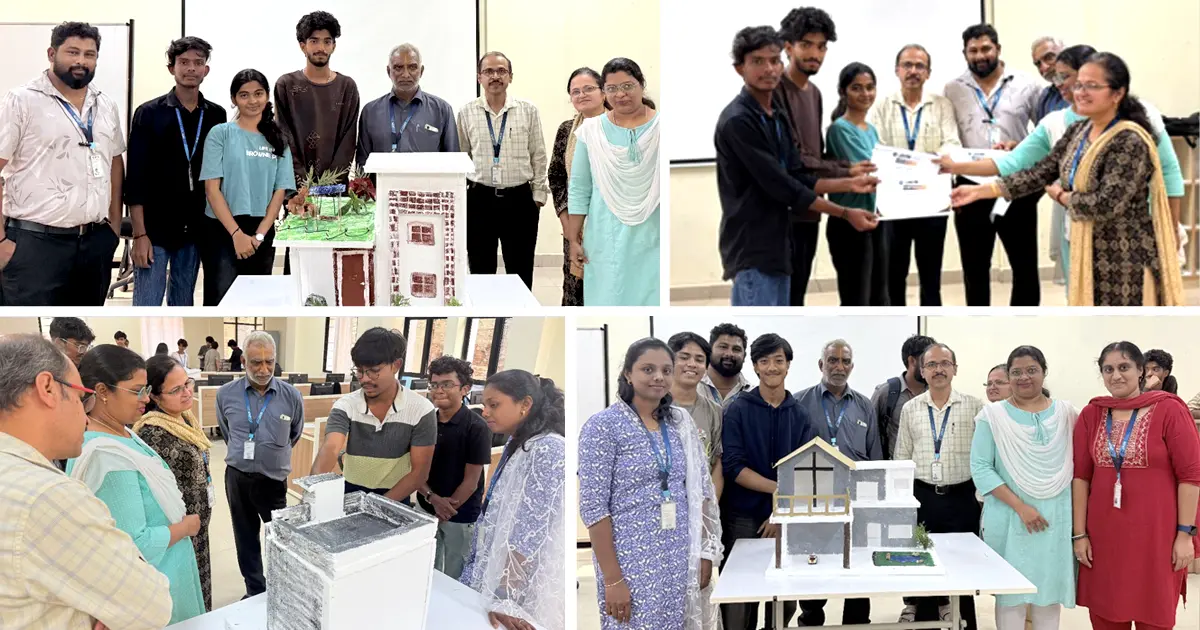
Bengaluru, 06 December 2025: The Department of Civil Engineering at JAIN (Deemed-to-be University), through its Atharva Club, successfully organised a Sustainable House Model-Making Competition on 06 December 2025 in the Civil Engineering Department Lobby. The event was exclusively conducted for first-year Civil Engineering students to encourage experiential learning, creativity, and awareness of sustainable construction principles.
The competition was designed to bridge theoretical learning with practical application, enabling students to conceptualise and construct sustainable housing models using eco-conscious design approaches. A total of seven teams comprising sixteen students participated enthusiastically. Participants utilised materials provided by the department, including cardboard, thermocol sheets, ice-cream sticks, gum, and cutters, along with supplementary materials sourced independently.
Each team presented a detailed explanation of their model, highlighting sustainability features, structural stability, and innovative design elements. The models were evaluated by Dr. A. K. Dasarathy, Head of the Department of Civil Engineering, based on predefined criteria such as concept clarity, sustainability measures, creativity, build quality, neatness, and overall presentation, amounting to a total of 100 marks.
The event was well supported by faculty members Dr. Dimple Bahri, Dr. Gopalakrishna Gaonkar, and Dr. Roshita David, along with laboratory instructors Mrs. Anusha K. N. and Mrs. Ramyashree S., who actively engaged with students throughout the competition. Upon completion of the evaluation, the first prize of ?3,000 along with a certificate was awarded to the winning team. In contrast, the runner-up team received a prize of ?1,500 with a certificate. All participants were commended for their innovative thinking and collaborative effort.
Addressing the participants, Dr. A. K. Dasarathy remarked, “Sustainable design is no longer optional in civil engineering; it is essential. Activities such as this competition provide students with valuable practical exposure and encourage them to think responsibly and innovatively beyond classroom learning.”
The Sustainable House Model Making Competition successfully fostered hands-on learning, teamwork, and problem-solving skills among first-year Civil Engineering students, while reinforcing the importance of sustainability in modern construction practices. The event concluded with a group photograph of the participants, faculty members, and the judging panel, marking its successful execution. Such initiatives reflect the university’s continued commitment to experiential education and environmentally responsible engineering. Similar student-centric activities are planned for the future to enhance practical learning outcomes further.