News


08 March 2026
Turning Ideas into Prototypes at FET’s Hands-On 3D Printing Workshop
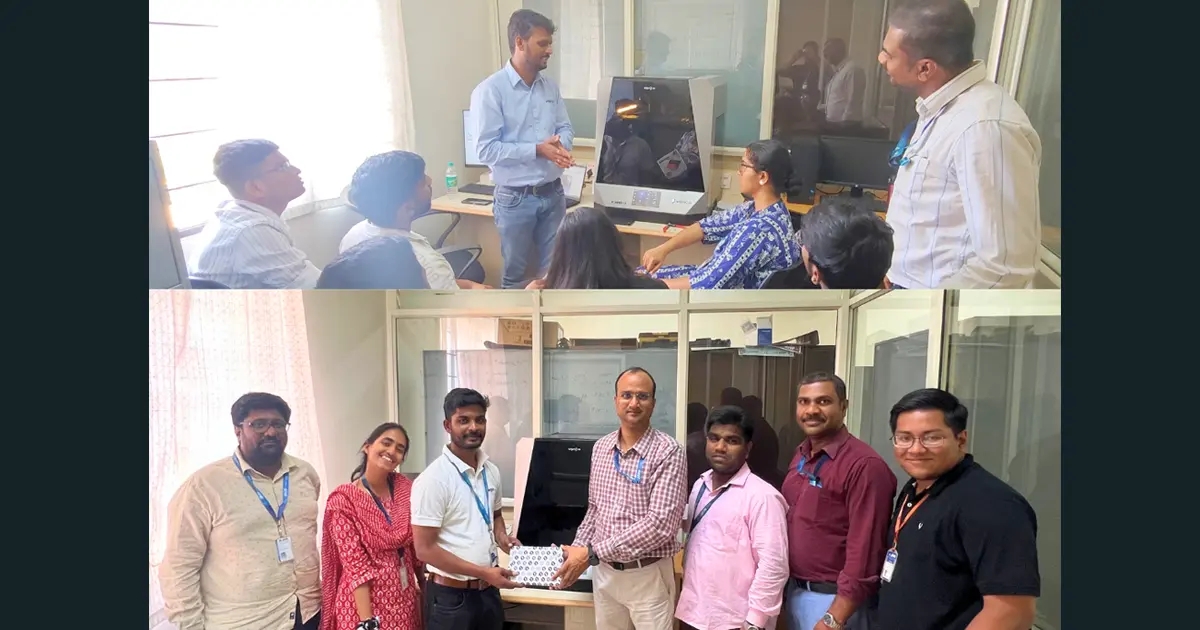
Bengaluru, 8th March 2026: A five-day hybrid workshop on “3D Printing using FFF Technology: Fundamentals to Industrial Practice” was conducted from 4 to 8 March 2026 at the Faculty of Engineering and Technology, JAIN (Deemed-to-be University), Bengaluru, in collaboration with Wipro 3D. Bringing together 113 participants, including students, faculty members, and research scholars, the programme focused on bridging academic learning with real-world industrial practices in additive manufacturing.
The workshop unfolded as a structured learning journey, beginning with foundational insights into 3D printing technologies and their industrial relevance. Early sessions introduced participants to design principles, including Design for Additive Manufacturing (DfAM), where they explored how digital models are optimised for efficient and high-quality production. As the programme progressed, the emphasis shifted from theory to application, with hands-on training in printer setup, calibration, and slicing workflows critical stages in transforming digital designs into physical objects.
Industry experts from Wipro 3D led practical sessions that immersed participants in real-world manufacturing environments. From machine diagnostics and extrusion testing to post-processing techniques and safety protocols, attendees gained a comprehensive understanding of the end-to-end 3D printing process. These experiences enabled participants to move beyond conceptual knowledge and engage directly with industrial-grade equipment and practices.
A notable highlight was the ideation session, where participants were encouraged to identify real-world challenges across sectors such as healthcare, sustainability, and automation. Working collaboratively, they conceptualised innovative solutions using 3D printing, reinforcing the role of additive manufacturing in problem-solving and product development.
By the final day, participants were actively developing and refining prototypes, applying their learning to optimise design and printing parameters. The workshop concluded with an evaluation process, including assessments and feedback, to gauge learning outcomes and programme effectiveness.
The initiative reflects the growing importance of industry-academia collaboration in preparing students for emerging technological landscapes. By combining technical knowledge with hands-on experience, the workshop equipped participants with practical skills and a deeper understanding of advanced manufacturing, aligning with the evolving demands of Industry 4.0.